
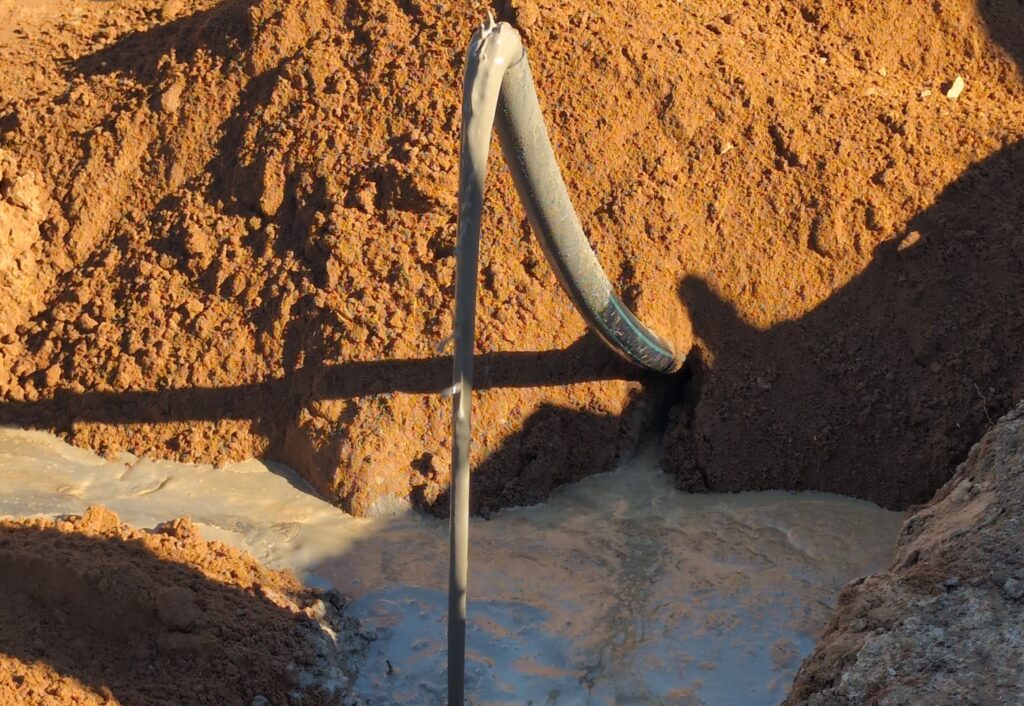
Bore grouting is the process of filling the annular space around installed conduits with an engineered grout mix once the bore is complete. On electrical installations, the purpose is thermal rather than structural. Cables generate heat under load, and that heat has to dissipate through whatever surrounds the conduit. Where a bore is left with voids, air pockets or unconsolidated drilling fluid around the duct, heat is trapped, the cable runs hotter than designed, and its current-carrying capacity has to be de-rated.
Thermal grout is used to eliminate those voids and provide a continuous, consistent medium around the conduit with a known thermal resistivity, expressed in K·m/W. Network operators specify a maximum TR value for the installed condition, and critically, that value must hold once the grout has dried out — many materials perform acceptably when wet but lose thermal conductivity as moisture leaves them. Grout mixes are selected and supplied to a verified design TR value so the installation meets the cable rating assumed in the electrical design.